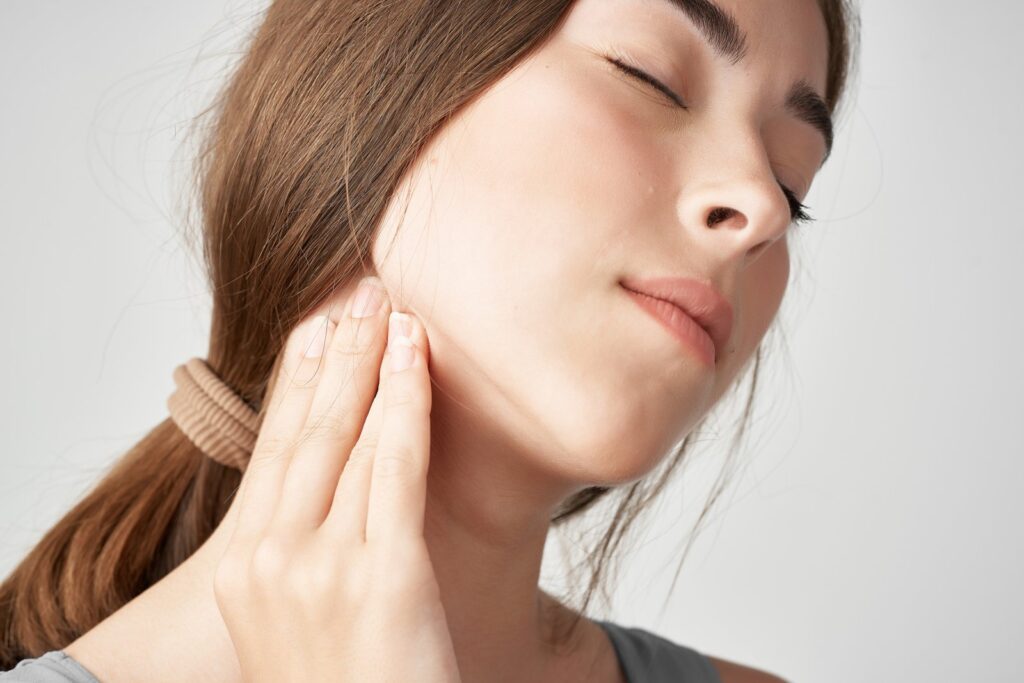
You open your mouth to yawn, take a big bite, or just talk, and there it is — a click, pop, or snap somewhere near your ear. It’s one of the most common questions people search when something about their jaw doesn’t feel quite right, and the honest answer is: it depends. Jaw clicking is extremely common, and not every click is a problem. Here’s what’s actually happening in the joint, when it’s worth paying attention to, and when it’s simply background noise.
This article is for general education and isn’t a substitute for an in-person evaluation.
What’s Actually Happening When Your Jaw Clicks
Your jaw joint — the temporomandibular joint, or TMJ — has a small disc of cartilage that normally glides smoothly between the jawbone and skull as you open and close your mouth. In many people, that disc shifts slightly out of its ideal position. As the jaw opens, the disc can pop back into place with an audible click; as it closes, it can slip forward again, sometimes producing a second click. This pattern is called disc displacement with reduction, and it’s one of the most common findings in people who report jaw noise.
According to a comprehensive review of the condition, TMJ clicking is one of the most frequent complaints associated with temporomandibular disorders, accounting for roughly a quarter of all clinical TMD signs. Notably, the same body of research points out that jaw clicking on its own is reported in a wide range of the general population — some estimates put it as high as 60% — which means clicking alone, without pain or other symptoms, doesn’t necessarily indicate a disorder requiring treatment.
Why Does My Jaw Pop When I Open My Mouth?
This is the most specific version of the question, and it usually comes down to that same disc-and-joint mechanism. As you open wide, the condyle (the rounded end of your jawbone) moves forward and down along the joint socket. If the disc has slipped slightly out of alignment, the condyle has to move past it, producing that pop or click at a fairly predictable point in the opening movement. Some people notice it more on wide movements like yawning; others notice it during chewing, talking, or even just resting their jaw in certain positions.
According to Cleveland Clinic, jaw popping is a common symptom of temporomandibular joint disorders (TMD), and it can be caused by a range of factors including jaw trauma, chronic teeth grinding or clenching, joint degeneration, and in some cases, genetics or structural differences in the joint itself.
When Jaw Clicking Is Just Background Noise
Not every click needs a treatment plan. If your jaw clicks but you have no pain, no limitation in how wide you can open, no locking (getting stuck open or closed), and no headaches, ear pain, or facial tension associated with it, it’s often reasonable to simply monitor it. Isolated clicking without these accompanying symptoms is common and, for many people, stays that way indefinitely without progressing into something that needs active treatment.
When Jaw Clicking Is Worth a Closer Look
Clicking becomes more clinically relevant when it’s paired with other symptoms: jaw pain (especially with chewing or wide opening), a limited range of motion or stiffness, locking (momentarily or fully getting stuck open or closed), frequent headaches around the temples, ear pain or pressure not related to an ear infection, or a noticeable shift in your bite alignment over time. If clicking shows up alongside any of these, it’s a reasonable signal that the joint and disc relationship may be contributing to a broader pattern worth evaluating properly, rather than something to wait out.
What Treatment Actually Looks Like
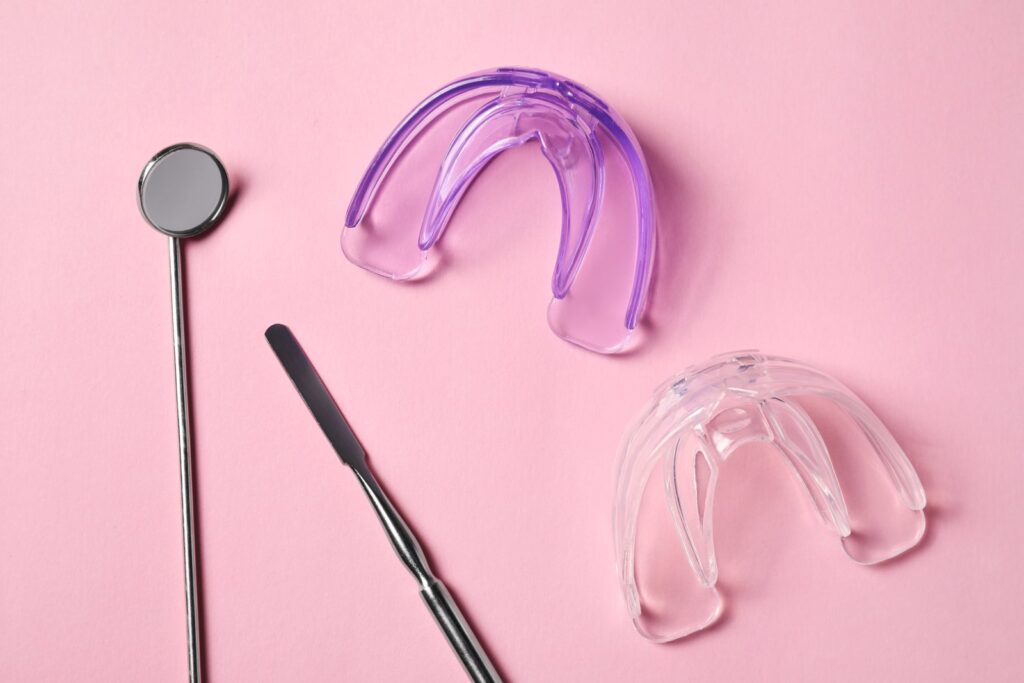
Treatment isn’t one-size-fits-all, and it depends on what’s actually driving the clicking and whether other symptoms are present. Research on disc displacement management points to a range of options depending on severity, including stabilization splints or orthotics designed to support a more balanced bite and reduce strain on the joint, addressing contributing habits like clenching or grinding, and in some cases, more targeted therapies aimed at the joint and surrounding muscles directly.
This is exactly the kind of evaluation-first approach we use at BEST — rather than treating a click in isolation, we look at how your jaw, bite, muscles, and joint function work together, since clicking is often one piece of a larger picture rather than an isolated issue. You can learn more about our full diagnostic process on our Comprehensive TMJ Evaluation page, and explore treatment options like TMJ Orthotics and Splint Therapy if a joint-supportive appliance is part of your plan.
Frequently Asked Questions
Why does my jaw pop when I open my mouth wide? Usually because the disc inside the joint shifts slightly out of position and pops back into alignment as the jaw opens — a pattern called disc displacement with reduction. It’s common and not automatically a sign of a serious problem.
Is jaw clicking always a sign of TMJ disorder? No. Clicking is reported in a large share of the general population without pain, limited motion, or other symptoms. It becomes more clinically significant when paired with pain, locking, or other functional issues.
Can jaw clicking go away on its own? Sometimes it stays stable, and sometimes it resolves as contributing habits like clenching are addressed. In other cases, it’s best managed through an evaluation-based treatment plan rather than left unaddressed indefinitely.
Should I see someone if my jaw clicks but doesn’t hurt? Not urgently, but if the clicking changes, worsens, or becomes accompanied by pain, stiffness, or locking, that’s a good time to get evaluated.
Getting a Clear Answer
If your jaw clicking is paired with pain, stiffness, or other symptoms — or you simply want to understand what’s actually happening in your joint — a proper evaluation is the best next step. Learn more about our approach to TMJ & Neuromuscular Dentistry, or request a consultation with Dr. Chui’s team to get answers specific to your jaw.
References
- Cleveland Clinic. Jaw Popping & Clicking: Causes, Symptoms & Treatment. Cleveland Clinic Health Library. https://my.clevelandclinic.org/health/symptoms/24665-jaw-popping
- Temporomandibular joint disc displacement with reduction: a review of mechanisms and clinical presentation. PMC, National Library of Medicine. https://www.ncbi.nlm.nih.gov/pmc/articles/PMC6382319/