Jaw problems rarely show up as a single, clean symptom. More often, it’s a combination — a jaw that feels tight in the morning, a bite that doesn’t quite line up the way it used to, and every so often, a moment where the jaw catches or won’t open all the way. These three symptoms — locking, misalignment, and tightness — are closely related, and understanding how they connect can make sense of what might otherwise feel like a confusing, scattered set of complaints.
This article is for general education and isn’t a substitute for an in-person evaluation.
Locking of Jaw Symptoms: What’s Actually Happening
Jaw locking happens when the disc of cartilage inside the temporomandibular joint (TMJ) shifts out of its normal position and gets stuck, blocking the joint’s normal motion. Clinically, this is most often described as “closed lock” — the jaw won’t fully open — caused by a condition called disc displacement without reduction, where the disc has moved out of alignment and doesn’t return to its correct position as the joint moves.
Research on this condition describes the mechanism in detail: a displaced disc can mechanically obstruct the normal forward movement of the jawbone, and joint overloading over time can trigger inflammatory changes that make the problem progressively harder to reverse. This is why jaw locking, especially if it’s new or worsening, is worth addressing rather than waiting out — early intervention is associated with better outcomes than letting a locking pattern become chronic.
Locking can range from brief, resolves-on-its-own episodes to a jaw that stays stuck and needs a provider’s help to release. Less commonly, the opposite can happen — the jaw drops open and won’t close (open lock or dislocation) — which typically requires prompt professional care rather than attempting to force it closed.
Jaw Misalignment: The Bite Connection
Jaw misalignment refers to a bite relationship where the upper and lower jaw — and the teeth within them — don’t meet the way they’re meant to. This can be a longstanding structural pattern present since childhood, or it can develop or worsen over time due to injury, tooth loss, joint changes, or chronic muscle tension pulling the jaw into an altered resting position.
Misalignment and TMJ dysfunction often reinforce each other. An uneven bite forces the jaw joint and surrounding muscles to compensate, which can increase strain on the joint and contribute to disc displacement over time. Conversely, joint or muscle changes from TMJ dysfunction can gradually shift how the jaw sits, subtly altering the bite. This is part of why jaw misalignment is rarely treated as a purely cosmetic or dental-alignment issue in a comprehensive TMJ evaluation — it’s assessed as part of the same interconnected system as joint position and muscle function.
Jaw Tightness and Stiffness: The Muscle Piece
While locking and misalignment involve the joint and bite directly, tightness and stiffness are usually a muscle problem — though one that’s often triggered by joint or bite issues in the first place. According to Cleveland Clinic, teeth grinding and clenching (bruxism) put significant strain on the jaw muscles and joint, and this muscle overactivity is a common source of morning jaw soreness, stiffness, and fatigue. Stress and anxiety can compound this, since facial and jaw muscles often tighten involuntarily during periods of tension, sometimes without a person even realizing it’s happening.
Jaw tightness can also develop as a protective response — when the joint itself is irritated or misaligned, surrounding muscles may stay contracted to limit movement and guard against pain, which paradoxically creates more stiffness and discomfort over time.
How These Three Symptoms Connect
It’s rarely useful to think of locking, misalignment, and tightness as three separate problems. In practice, they frequently form a cycle: misalignment strains the joint, joint strain contributes to disc displacement and potential locking, and the surrounding muscles tighten in response to both the mechanical problem and the discomfort it causes. Addressing only one piece — say, relaxing tight muscles without addressing an underlying bite issue — often provides only temporary relief, since the root mechanical cause is still active.
This is exactly why a comprehensive evaluation looks at the joint, the bite, and the muscles together rather than treating each symptom in isolation. You can learn more about how we approach this kind of evaluation on our Comprehensive TMJ Evaluation page.
When These Symptoms Are Worth Evaluating
A few patterns suggest it’s time for a proper assessment rather than waiting things out: jaw locking that’s new, recurring, or lasting longer each time; a bite that feels noticeably different than it used to; jaw tightness or stiffness that doesn’t resolve with basic self-care; or any of these symptoms occurring alongside jaw clicking or ear-related discomfort. If clicking is part of your symptom picture, our guide on Why Does My Jaw Click or Pop? explains that related mechanism, and TMJ and Ear Pain covers how jaw dysfunction can be felt in the ear.
Treatment Often Starts Conservatively
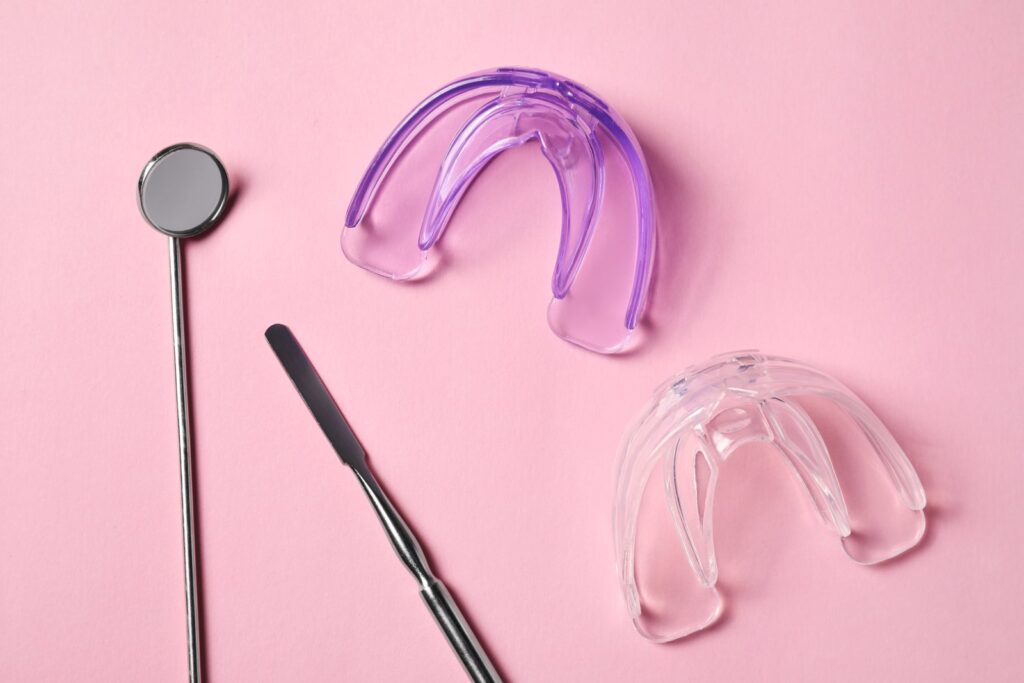
For most patients, addressing this cluster of symptoms starts with non-surgical approaches — custom orthotics to stabilize the bite and reduce joint strain, targeted muscle therapy, and habit modification for clenching or grinding. We cover this approach, and when more advanced options become necessary, in Is TMJ Surgery Necessary? Alternatives to Know First.
Getting a Clear Picture of What’s Going On
If you’re dealing with jaw locking, a bite that feels off, or persistent tightness and stiffness, these symptoms are worth understanding together rather than individually. Request a consultation with Dr. Chui’s team to get a comprehensive evaluation and a clear path forward.
References
- Application of auriculotemporal nerve block and dextrose prolotherapy in exercise therapy of TMJ closed lock in adolescents and young adults. PMC, National Library of Medicine. https://www.ncbi.nlm.nih.gov/pmc/articles/PMC8004452/
- Cleveland Clinic. Bruxism (Teeth Grinding): Symptoms, Causes & Treatment. Cleveland Clinic Health Library. https://my.clevelandclinic.org/health/diseases/10955-teeth-grinding-bruxism