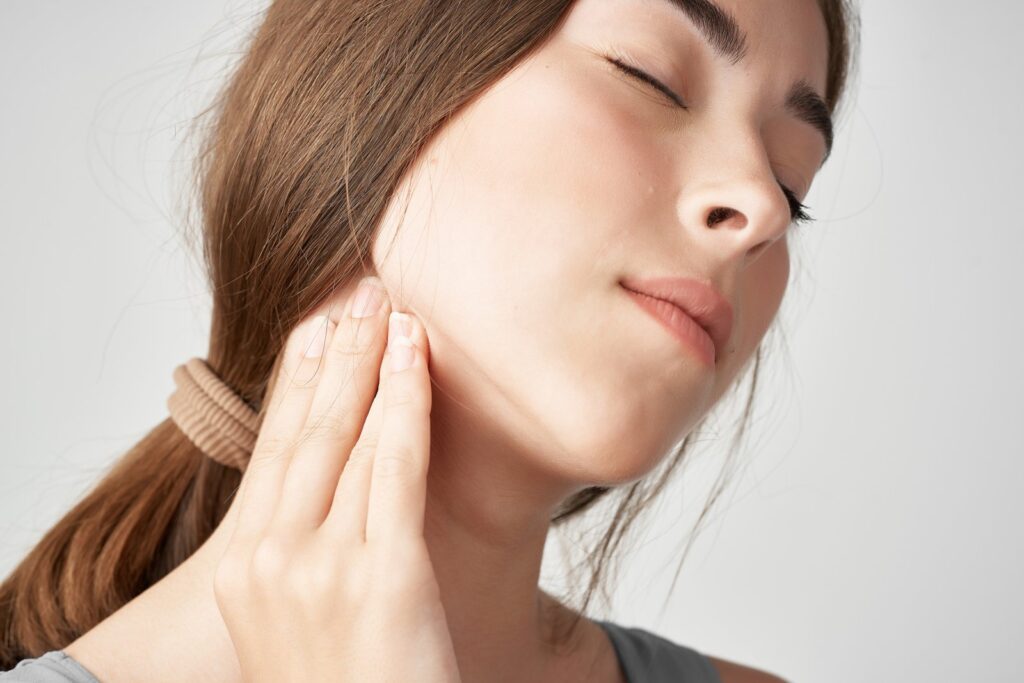
You have an earache, so you assume it’s an ear infection — but the antibiotics don’t help, or your doctor checks and says your ear looks completely normal. If this sounds familiar, the source of the problem might not be your ear at all. Pain in jaw at ear locations is one of the more commonly misdiagnosed symptoms in medicine, and the real cause is often sitting just millimeters away from where the pain is felt: the temporomandibular joint.
This article is for general education and isn’t a substitute for an in-person evaluation.
Why TMJ and Earache Go Together
The temporomandibular joint (TMJ) sits directly in front of your ear canal on each side of your face — close enough that inflammation, dysfunction, or muscle tension in the joint can easily be felt as ear pain rather than jaw pain. According to Cleveland Clinic, TMJ disorders commonly cause symptoms including earaches, ringing in the ears (tinnitus), and a feeling of ear fullness, alongside the more expected jaw pain and clicking.
This isn’t just proximity — there’s a real anatomical explanation. According to a clinical resource on otalgia (ear pain), ear pain is classified as either primary (coming directly from the ear itself) or secondary, meaning it’s referred from a nearby structure. The trigeminal nerve’s mandibular branch, specifically the auriculotemporal nerve, supplies sensation to both the TMJ and structures within the ear. Because the same nerve pathway carries signals from both areas, the brain can have genuine difficulty distinguishing whether pain is originating from the jaw joint or the ear — a phenomenon called referred pain.
Jaw and Ear Discomfort: What the Research Shows
This connection isn’t just theoretical. A clinical study specifically examining ear symptoms in patients with orofacial pain and jaw dysfunction found a strong association between ear symptoms and muscle tenderness on palpation — particularly on the same side of the face. Researchers pointed to shared innervation from branches of the trigeminal nerve as the likely explanation, noting that muscle hyperactivity (such as clenching or grinding) can produce referred pain in the ear and may even increase tension in small muscles connected to the eustachian tube, contributing to sensations like ear fullness.
There’s also a shared developmental origin worth knowing about: the TMJ and certain small bones of the middle ear develop from related tissue during early embryonic growth, which may further explain why dysfunction in one area is so often felt in the other.
Common Symptoms of TMJ-Related Ear Pain
TMJ-related ear discomfort can show up in several ways, often alongside more typical jaw symptoms:
- A dull ache or sharp pain in or around the ear, especially on one side
- A feeling of ear fullness or pressure, without signs of infection
- Tinnitus (ringing or buzzing in the ear)
- Pain that worsens with chewing, talking, or wide jaw movements
- Jaw clicking, popping, or stiffness occurring alongside the ear symptoms
- Pain that seems to move between the jaw and ear rather than staying in one fixed spot
How to Tell the Difference From an Ear Infection
A few patterns can help distinguish TMJ-related ear pain from a true ear infection:
- Timing with jaw movement. TMJ-related ear pain often worsens with chewing, yawning, or talking, while infection-related ear pain typically doesn’t change much with jaw movement.
- Absence of other infection signs. Ear infections often come with fever, visible fluid or discharge, or a red, inflamed eardrum on exam — TMJ-related ear pain typically doesn’t.
- Response to treatment. Ear pain that doesn’t improve with antibiotics or standard ear infection treatment is a reasonable signal to look at the jaw instead.
- Accompanying jaw symptoms. Clicking, popping, jaw stiffness, or facial muscle tenderness alongside the ear pain point toward a TMJ connection.
None of these are a substitute for a proper exam, but they’re useful context if you’ve already ruled out an ear infection without relief.
Why a Coordinated Evaluation Matters
Because TMJ-related ear pain is a referred symptom rather than a direct ear problem, treating the ear alone won’t resolve it — the joint, muscles, and bite relationship need to be assessed together. This is exactly the kind of evaluation we focus on: rather than treating an earache in isolation, we look at how your jaw, muscles, and joint function are contributing to the pain you’re feeling. You can learn more about our diagnostic process on our Comprehensive TMJ Evaluation page.
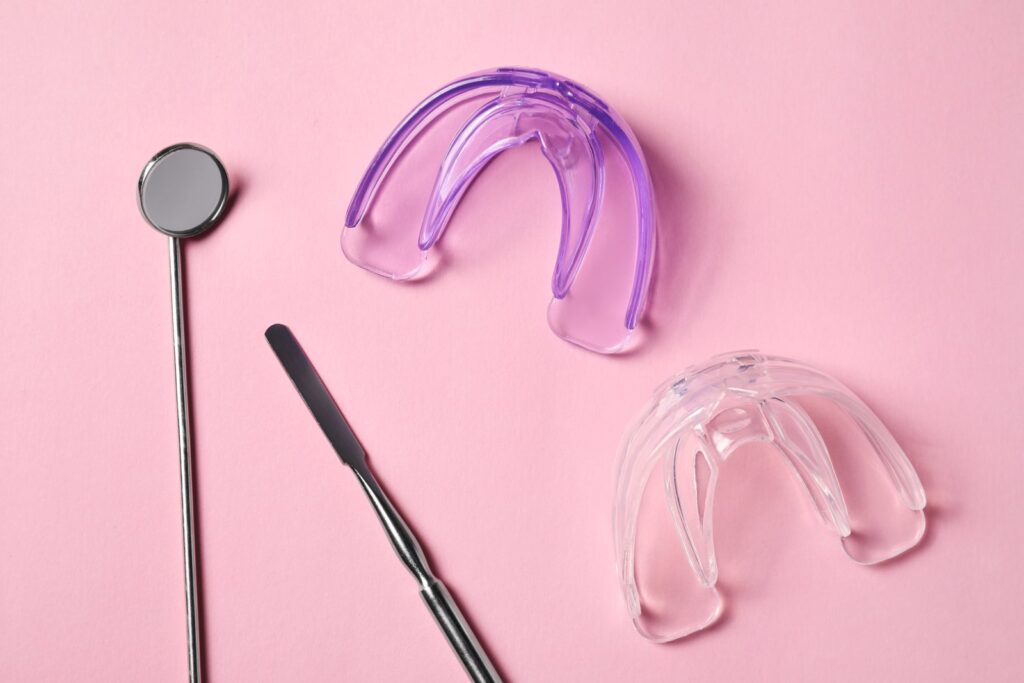
If you’re also noticing jaw clicking or popping alongside the ear symptoms, our related guide, Why Does My Jaw Click or Pop?, covers that mechanism in more depth. And if a supportive appliance is part of your treatment plan, our TMJ Orthotics and Splint Therapy page explains how that approach works.
Getting an Accurate Diagnosis
If you’ve been dealing with ear pain that hasn’t responded to typical ear treatment, especially alongside jaw pain, clicking, or facial muscle tension, it’s worth having your jaw evaluated rather than continuing to treat the ear alone. Request a consultation with Dr. Chui’s team to get a clear answer about what’s actually causing your symptoms.
References
- Cleveland Clinic. TMJ Disorders: Symptoms, Treatment & Prevention. Cleveland Clinic Health Library. https://my.clevelandclinic.org/health/diseases/15066-temporomandibular-disorders-tmd-overview
- Ear symptoms in patients with orofacial pain and dysfunction — An explorative study on different TMD symptoms, occlusion and habits. PMC, National Library of Medicine. https://pmc.ncbi.nlm.nih.gov/articles/PMC8638311/